

Hosted by
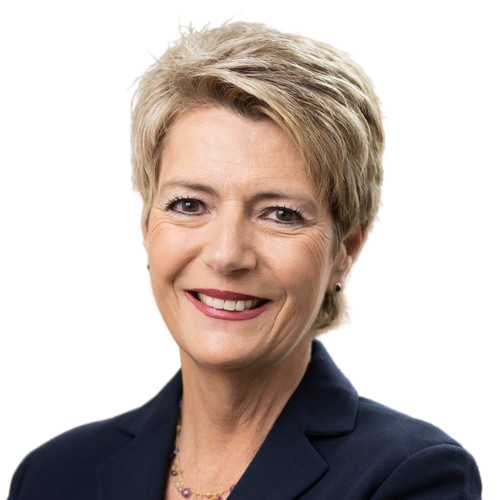
Karin Keller-Sutter
Federal Councillor & Head of the Federal Department of Finance, Switzerland

Bridget Rose Mesina-Romero
Director, Payments Policy and Development Department
Bangko Sentral ng Pilipinas
Atty. Bridget Rose M. Mesina-Romero is the Director of the Payments Policy and Development Department (PPDD) of the Bangko Sentral ng Pilipinas, primarily charged with promoting the safety, efficiency, reliability, inclusivity and affordability of payment systems in the Philippines.
Atty. Romero leads a team which focuses on the formulation of policies in support of the BSP’s mandate under the National Payment Systems Act; the implementation of payments development initiatives in order to accelerate nationwide adoption of digital payments; and the periodic monitoring and measurement of the effectiveness of said policies and progress of various initiatives using select payments indicators. She also leads the BSP’s core team working on cross-border payments initiatives within the ASEAN region.
Atty. Romero serves as the BSP's representative in international working groups focusing on payment systems. She currently holds roles such as being a principal representative for the ASEAN Working Committee on Payment and Settlement Systems (WC-PSS) and for the BSP team in the Alliance for Financial Inclusion Working Group on Digital Financial Services, and a member of the BSP team in the EMEAP Working Group on Payments and Market Infrastructure (WGPMI). Additionally, she is among the project leads for various critical projects of the BSP on enhancing national payment system safety and efficiency such as the BSP's wholesale CBDC pilot project known as "Project Agila", and the BSP national ISO 20022 harmonization project. Currently, represents BSP in Project Nexus1, and BSP’s alternate representative to the Nexus Global Payments – Nexus Transition Committee and Board.
Atty. Romero was a member of the National Retail Payment System (NRPS) Core Team who received the 2020 Presidential Lingkod Bayan Award (Group Category). As part of the NRPS core team, Atty. Romero was primarily involved and instrumental in the accomplishment of milestone NRPS initiatives such as the NRPS Framework, the establishment of a payment system management body and the formation of priority automated clearing houses namely, PESONet and InstaPay, among others.
Atty. Romero obtained her Bachelor of Science in Business Administration and Accountancy and Juris doctor degrees from the University of the Philippines. She is a Certified Public Accountant (CPA) and a member of the Philippine Bar.
1 Nexus is a multilateral instant payment scheme that aims to enable safe, efficient (fast and low cost), transparent, and accessible cross border payments by connecting participants’ domestic instant (or “real time” or “fast”) payment systems (IPS) globally. Project Nexus used to be an initiative led by the Bank for International Settlements Innovation Hub (BISIH) and the BSP was a participant in Project Nexus since Phase 3.
In March 2025, the Nexus Global Payments Ltd. (NGP) was incorporated as a company limited by guarantee in Singapore to operationalize and manage the Nexus scheme. NGP's incorporation by the five first mover countries (FM5) in Project Nexus, Reserve Bank of India, Bank Negara Malaysia, Bangko Sentral ng Pilipinas, the Monetary Authority of Singapore, and Bank of Thailand, marks the transition of the Nexus initiative from a BISIH project to real-world implementation. Currently in Phase 4, the FM5 is working toward live implementation of the Nexus scheme, with the European Central Bank and Bank Indonesia as special observers.
Speaking at
-
4:00–5:30pmTue 23 JunGFTN InsightsRoundtable Room 2, Ground FloorOpen
Bridging the Financial Gap
Solving for the Fundamentals: Identity Wallets, Trust Infrastructure, and Preparing for the Agentic Economy
-
 Aoife HoulihanVice President, Government AffairsVisa
-
 Bridget Rose Mesina-RomeroDirector, Payments Policy and Development DepartmentBangko Sentral ng Pilipinas
-
 Christina WuLead, Global Policy and Regulatory Strategy, EMEACircle
-
 Felix LaufenbergOpen Transaction Layer LeadFireblocks
-
 Gary LiuCo-Founder & Chief Executive OfficerTerminal 3
-
 Guillermo Galicia RabadanFinancial Sector Specialist - Payment Systems Development GroupThe World Bank
-
 Liam GlennonHead of North America Financial InstitutionsTRM Labs
-
 Livia BenistyChief External Affairs OfficerBanking Circle
-
 Mai FujimotoCo-FounderzERC20
-
 Dr. Nicolas JacquemartChief Legal OfficerCardano Foundation
-
 Vedran LalicSenior Digital Identity and Trust Services AdvisorThe United Nations University-EGOV
-
 Ivan Mortimer-SchuttsGlobal Head of vLEIGlobal Legal Entity Identifier Foundation (GLEIF)Moderator
About this session
By the end of 2026, all EU member states will be required to issue the European Digital Identity Wallet (EUDI), with a goal of achieving 80% voluntary adoption by 2030.
While much of the current focus has been on user adoption and interoperability, a more fundamental shift in the economy is underway: the rise of AI agents capable of acting, transacting, and coordinating on behalf of individuals and businesses. This raises a critical question: how can these agents be trusted to act, transact, and take decisions safely across platforms and jurisdictions?
Identity-wallets and verifiable credentials hold the potential to become foundational trust infrastructure that unlocks this shift, by authenticating identity, delegating authority from human to agent, and resolving KYC and liability questions. With the right design choices today, the EUDI could evolve into a global benchmark not just for digital identity, but for programmable, interoperable trust.
Yet, critical questions remain around adoption, sustainable business models, and resilience to emerging technological risks. As the deadline draws closer, this roundtable will convene financial institutions, digital identity and verifiable credentials providers, technologists, and policymakers to examine key design and coordination challenges and trade-offs facing identity wallet ecosystems today. -
-
2:00–3:30pmWed 24 JunGFTN InsightsRoundtable Room 1, Ground FloorOpen
Next-Gen Transactions
The Great Convergence: Building Tomorrow's Integrated Payments Networks
-
 Agnès BastaertHead of Global Affairs & Strategic Development, EuropeAnt International
-
 Anubhav SharmaDeputy Chief - Partnerships, Business Development & MarketingNPCI International Payments Limited
-
Bridget Rose Mesina-RomeroDirector, Payments Policy and Development DepartmentBangko Sentral ng Pilipinas
-
 Helena ForestEVP, Real Time Payments Product & CommercialMastercard
-
 Lawrence ChanGroup Chief Executive OfficerNetwork for Electronic Transfers (Singapore)
-
 Marc SchluepHead of Banking OperationsSwiss National Bank
-
 Mike TruterDirector, Head of Industry EngagementSwift
-
 Tim MoncrieffManaging Director of Visa Payments & Currencycloud & VP, Strategic Initiatives & Execution, Visa DirectVisa
-
 Jo YeoDirectorMonetary Authority of SingaporeModerator
About this session
The consensus is clear: global payment networks see collaboration, not competition, as their path to future dominance. Major networks are already building bridges – Mastercard with Ant International, Swift with blockchain layers, NGP's Nexus connecting instant payment systems worldwide. But as these technical integrations accelerate, a critical question emerges: what policy frameworks will govern this interconnected future?
When payment networks interoperate across borders, whose rules apply? How do regulators ensure consumer protection when a transaction touches multiple jurisdictions and networks? As networks become more interdependent, how do policymakers balance innovation with systemic risk? And perhaps most importantly – how can policy frameworks evolve to support beneficial network effects while preventing any single player from wielding excessive market power?
This roundtable brings together payment network leaders, financial regulators, and policy experts to explore how regulatory frameworks must adapt to govern an era of payment network collaboration. The stakes are high: get the policy right, and we unlock unprecedented efficiency and inclusion in global payments. Get it wrong, and we risk creating new systemic vulnerabilities or stifling the very innovation that promises to transform how the world moves money. -
-
2:00–3:30pmThu 25 JunGFTN InsightsRoundtable Room 2, Ground FloorOpen
Blueprint for Digital Assets
Building a Practitioner's Guide for Tokenization in Finance: Oversight Panel Convening
-
 Dr. Abbas AlbashaSenior Strategy Consultant CBDCGiesecke+Devrient (G+D)
-
 Dr. Alexandra HachmeisterDirector General Digital EuroDeutsche Bundesbank
-
 Alisha ChhanganiAssociate Director, Future of MoneyAtlantic Council
-
 Amira KarimHead of International Public Policy, Payments & Financial ServicesAmazon
-
 Aqsa ZubairDeputy Director, FinTech SupervisionBermuda Monetary Authority
-
 Arena FernandezHead of Digital Regulatory InitiativesAmazon
-
 Ariadne PlaitakisDeputy Director, Regulation, Policy, & ResearchGates Foundation
-
 Bilal Bin SaqibChairmanPakistan Virtual Assets Regulatory Authority
-
Bridget Rose Mesina-RomeroDirector, Payments Policy and Development DepartmentBangko Sentral ng Pilipinas
-
 Chad HarperHead of Coinbase InstituteCoinbase
-
 Daisuke TerayamaDeputy Director-General, Head of Fintech CenterBank of Japan
-
 Emma JoyceChief Revenue OfficerGlobal Blockchain Business Council (GBBC)
-
Ivan Mortimer-SchuttsGlobal Head of vLEIGlobal Legal Entity Identifier Foundation (GLEIF)
-
 Kevin CowanMember of the BoardCentral Bank of Chile
-
 Dr. Mark StaplesChief Technology OfficerDigital Finance CRC
-
 Matilda Asante - AsieduSecond Deputy GovernorBank of Ghana
-
 Michael MaurerResearch EngineerMIT Digital Currency Initiative (DCI)
-
 Mo JalilHead of Institutional PrivacyEthereum Foundation
-
 Natalya ThakurFounder & Chief Executive OfficerKnova
-
 Pallavi ThakurDirector, Digital Assets Industry EngagementSwift
-
 Peter KerstensAdvisor, DG FISMAEuropean Commission
-
 Sébastien Van CampenhoudtDirector, Innovation & Digital Assets, Tokenized Cash LeadEuroclear
-
 Steve VallasChief Executive OfficerBlockchain APAC
-
 Sunayna TutejaFormer Chief Innovation OfficerFederal Reserve System
-
 Tang WeiHead of Public Policy, Southeast Asia & Greater ChinaStripe
-
 Toh Wee KeeGlobal Head of InsightsKinexys by J.P. Morgan
-
 Wee Kiat GohOpen Innovation LeadJulius Baer
-
 Jael TanHead of Government ProgrammesGlobal Finance & Technology Network (GFTN)Moderator
-
 Maha El DimachkiChief Executive Officer, GFTN SolutionsGlobal Finance & Technology Network (GFTN)Moderator
About this session
Tokenization is reshaping financial infrastructure across many economies. The decisions that are being made now on architecture, standards and governance will determine whether that infrastructure serves developed and emerging and developing economies, or leaves some behind. Ensuring that outcome requires senior public sector voices at the centre of these conversations.
This session brings both working groups and the public sector Oversight Panel together for the first time. Working group leads will present their confirmed problem statements on what the evidence shows, and receive feedback and recommendations that working groups will pursue to build the practitioner's guide that will publish at Singapore FinTech Festival in November 2026.
About the initiative
GFTN is launching _Tokenization in Finance: Evidence and Implementation Pathways_, a structured, multi-stakeholder initiative convening two working groups drawn from leading financial institutions, infrastructure providers, and market participants to assemble a practitioner-oriented evidence base spanning spanning digital money and payment rails through to tokenized real-world assets, securities, funds, and capital markets infrastructure. At Singapore FinTech Festival in November 2026, the initiative will publish a practitioner guide designed to give financial institutions a structured basis for sequencing their digital asset strategies, and to equip regulators and finance ministries in emerging and developing economies with implementation pathways they can draw on directly.
-
-
4:00–5:30pmThu 25 JunGFTN InsightsRoundtable Room 1, Ground FloorOpen
Blueprint for Digital Assets
Beyond De-Risking: Are Stablecoins the Future of Trusted Cross-Border Payment Infrastructure?
-
 Adam GagenGlobal Head of Government AffairsRevolut
-
Bridget Rose Mesina-RomeroDirector, Payments Policy and Development DepartmentBangko Sentral ng Pilipinas
-
 Calvin ChengChairmanPaymonade Tech
-
 Carine ChartouniDeputy Division Chief, Legal DepartmentInternational Monetary Fund
-
 Dr. Guerino ArdizziDeputy Head of the Analysis & Database Division (Retail Payment Instruments & Services Directorate)Banca d'Italia
-
 Jeannie LimCo-Founder & Head of GrowthXweave.io
-
 Juan López CarreteroHead of Market Development EuropeStellar Development Foundation
-
 Julie GuettaManaging DirectorThitsaWorks
-
 Mathias ImbachCo-founder & Group Chief Executive OfficerSygnum
-
 Matthias ObrechtHead Supervision New TechnologiesSwiss Financial Market Supervisory Authority (FINMA)
-
 Steven McWhirterGlobal Policy LeadBinance
-
 Prof. Yesha YadavBoard Member & ProfessorFintech Foundation, Vanderbilt Law School
-
 Lucy InghamVice President of ResearchFXC IntelligenceModerator
About this session
Cross-border payments remain among the most expensive, slowest, and least accessible financial services globally. Stablecoins have emerged as a working alternative in the corridors underserved by traditional correspondent banking, processing significant volume alongside traditional rails, but questions of trust, reserve integrity, adoption, and systemic risk remain unresolved.
As regulatory frameworks mature across jurisdictions, this roundtable will explore the question of whether stablecoins are poised to graduate from a parallel system into genuine cross-border payment infrastructure, and what has to be true about their design, governance, and regulatory treatment for that to happen.
With payment-native banks, institutional settlement networks, and central banks at the table, the conversation will move beyond the technology debate to the harder questions of standards, coexistence, and who bears the risk when settlement infrastructure fails at scale.
-

