.svg)
Hosted by
Karin Keller-Sutter
Federal Councillor & Head of the Federal Department of Finance, Switzerland
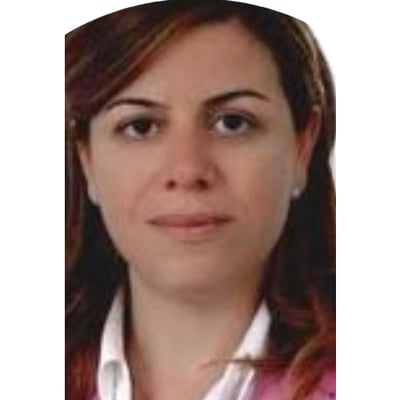
Carine Chartouni
Deputy Division Chief, Legal Department
International Monetary Fund
Ms. Carine Chartouni is the Deputy Division Chief of the Financial and Fiscal Law Division of the IMF’s Legal Department, overseeing the work on central banking and financial sector, covering core areas and new ones such as Fintech. The latter entails supporting the IMF member countries in the design of their legal frameworks in the context of IMF surveillance, lending, and capacity development, and contributing to the formulation of legal policies. Previously, Ms. Chartouni was an Executive Director and Head of the Compliance Department at the Central Bank of Lebanon where she also held other positions including as Deputy General Counsel of the Legal Department. Ms. Chartouni has also worked as a Corporate Lawyer with Dewey & Leboeuf LLP in Dubai. She holds an International Executive MBA from ESCP Europe, an LL.M in International Law from Temple University, and an LL.B in Civil Law from the LA Sagesse University. Ms. Chartouni is the recipient of the award granted by the Lebanese parliamentarians to leading women in the public sector. Ms. Chartouni is also a member of the Beirut and the New York Bar Associations.
Speaking at
-
4:00–5:30pmThu 25 JunGFTN InsightsRoundtable Room 1, Ground FloorOpen
Blueprint for Digital Assets
Beyond De-Risking: Are Stablecoins the Future of Trusted Cross-Border Payment Infrastructure?
-
 Adam GagenGlobal Head of Government AffairsRevolut
-
 Bridget Rose Mesina-RomeroDirector, Payments Policy and Development DepartmentBangko Sentral ng Pilipinas
-
 Calvin ChengChairmanPaymonade Tech
-
 Carine ChartouniDeputy Division Chief, Legal DepartmentInternational Monetary Fund
-
 Dr. Guerino ArdizziDeputy Head of the Analysis & Database Division (Retail Payment Instruments & Services Directorate)Banca d'Italia
-
 Jeannie LimCo-Founder & Head of GrowthXweave.io
-
 Juan López CarreteroHead of Market Development EuropeStellar Development Foundation
-
 Julie GuettaManaging DirectorThitsaWorks
-
 Mathias ImbachCo-founder & Group Chief Executive OfficerSygnum
-
 Matthias ObrechtHead Supervision New TechnologiesSwiss Financial Market Supervisory Authority (FINMA)
-
 Steven McWhirterGlobal Policy LeadBinance
-
 Prof. Yesha YadavBoard Member & ProfessorFintech Foundation, Vanderbilt Law School
-
 Lucy InghamVice President of ResearchFXC IntelligenceModerator
About this session
Cross-border payments remain among the most expensive, slowest, and least accessible financial services globally. Stablecoins have emerged as a working alternative in the corridors underserved by traditional correspondent banking, processing significant volume alongside traditional rails, but questions of trust, reserve integrity, adoption, and systemic risk remain unresolved.
As regulatory frameworks mature across jurisdictions, this roundtable will explore the question of whether stablecoins are poised to graduate from a parallel system into genuine cross-border payment infrastructure, and what has to be true about their design, governance, and regulatory treatment for that to happen.
With payment-native banks, institutional settlement networks, and central banks at the table, the conversation will move beyond the technology debate to the harder questions of standards, coexistence, and who bears the risk when settlement infrastructure fails at scale.
-

