

Hosted by
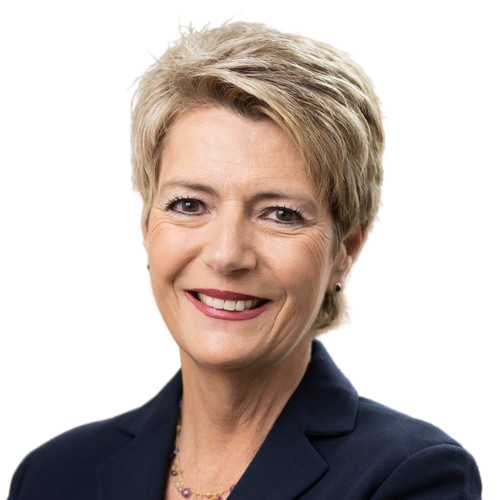
Karin Keller-Sutter
Federal Councillor & Head of the Federal Department of Finance, Switzerland

Nicole Sandler
Chief Ecosystem Officer
Ubyx Inc
Nicole Sandler is the Chief Ecosystem Officer at Ubyx. She is an award-winning digital policy expert driving stakeholder engagement and shaping financial regulation in FinTech, AI, and digital assets; formerly Head of Digital Policy at Barclays.
Nicole sat on the European Commission’s Expert Group on Regulatory Obstacles to Financial Innovation and participated in the Crypto-asset and Blockchain roundtables at the European Parliament.
She regularly speaks on panels, presents at conferences and universities, has articles published and focuses on upskilling and diversity initiatives. Further, she was named in the Financial News ‘Top 20 Most Influential Women in Digital Assets and awarded the Freedom of the City of London.
Speaking at
-
12:00–1:30pmTue 23 JunGFTN InsightsRoundtable Room 2, Ground FloorOpen
Roadmap for AI and Quantum
Agentic Commerce: Who Governs the Machine that Pays?
-
 Amira KarimHead of International Public Policy, Payments & Financial ServicesAmazon
-
 Chan Yam KiManaging Director, Asia PacificCircle
-
 Colin PayneHead of InnovationFinancial Conduct Authority (FCA)
-
 Dea MarkovaDirector of PolicyFireblocks
-
 Georg SchneiderGlobal Head of RWADigital Asset
-
 Jesse McWatersEVP, Head of Global PolicyMastercard
-
 Dr. Mansour AlsalehGeneral Director for Innovation HubSAMA
-
 Nicole SandlerChief Ecosystem OfficerUbyx Inc
-
 Simon TaylorGTMTempo
-
 Sophie GilderManaging Director, Blockchain & Digital AssetsCommonwealth Bank Australia
-
 Tang WeiHead of Public Policy, Southeast Asia & Greater ChinaStripe
-
 Thibault MurelCISODFNS
-
 Jaskaran BhallaHead of ContentGlobal Finance & Technology Network (GFTN)Moderator
About this session
AI agents are already initiating real financial transactions - booking, subscribing, settling, and disbursing without a human approving each step. The commerce and payments infrastructure built around human decision-makers was not designed for a counterparty that never sleeps, cannot be held to a contract in the traditional sense, and can be compromised at the model layer rather than the credential layer.
This session convenes payments architects, legal practitioners, and AI deployment leads to work through the practical questions the industry is looking to answer: how do you authenticate an agent, assign liability for an autonomous transaction gone wrong, and design governance frameworks for a technology that is already in production.
Participants will examine the specific mechanics of agentic payment flows - wallet delegation architectures, spending limit enforcement, multi-agent authorisation chains, and the emerging standards around agent identity that are still being written in real time by consortia that have not yet reached consensus.
The session will also surface the fraud and risk management implications: how transaction monitoring systems designed to flag anomalous human behaviour respond to the high-frequency, pattern-consistent activity of a well-functioning agent - and what entirely new risk frameworks may be required when the buyer is a model, the merchant is an API, and the dispute resolution process was designed for neither. -
-
11:50am–12:30pmWed 24 JunForum StageKongresssaal, Level 1OpenModerator
Next-Gen Transactions
The Agentic Checkout: When AI Becomes the Buyer
-
 Mamerto TangonanDeputy GovernorBangko Sentral ng Pilipinas
-
 Saira ZahidDirector, Agentic PaymentsAmazon
-
 Sam Hinton-SmithHead of International Public PolicyStripe
-
 Shayan HazirChief Digital Officer, Asia (xHK) & MENATHSBC
-
 Tom MuttonExecutive Director of Payments Innovation & FintechBank of England
-
Nicole SandlerChief Ecosystem OfficerUbyx IncModerator
About this session
AI agents are already booking travel, managing subscriptions, and initiating B2B purchases - without a human clicking confirm. As agentic commerce scales, the payments infrastructure built for human decision-makers faces fundamental questions: how do you authenticate a machine, assign liability for an autonomous transaction, and prevent fraud when the buyer never sleeps? This session examines the emerging architecture of machine-to-machine commerce and what it means for every layer of the payments stack.
-
-
1:00–2:00pmWed 24 JunLaunchpadLaunchpad Room, Level 1Open
Others
The Future of Cross-Border Commerce in the Age of AI and Stablecoins - Are We Building Payments Infrastructure That Works for Merchants, Consumers, and Machines? - Powered by Amazon
-
Amira KarimHead of International Public Policy, Payments & Financial ServicesAmazon
-
Nicole SandlerChief Ecosystem OfficerUbyx Inc
-
 Nilixa DevlukiaChairOpen Finance Association
-
Sophie GilderManaging Director, Blockchain & Digital AssetsCommonwealth Bank Australia
-
 Camilla BullockChief Executive OfficerEmerging Payments Association AsiaModerator
About this session
Cross-border payments for merchants remain expensive, slow, and fragmented — and for SME sellers in emerging markets, often inaccessible entirely. This session tests whether tokenised money (stablecoins, tokenised deposits, CBDCs) is genuinely reducing cost, time, and friction for merchants in live corridors today, or whether the promise still outpaces reality. It then introduces agentic commerce — AI agents executing transactions autonomously on behalf of businesses — as the stress test that reveals whether the infrastructure, regulation, and trust frameworks being built are fit for what comes next. Participants will leave with a grounded picture of where tokenised money works for merchants today, where the gaps remain (particularly for SME sellers in emerging markets), and the specific policy and infrastructure conditions that would unlock the next stage of cross-border commerce.
-

