
.svg)
Hosted by
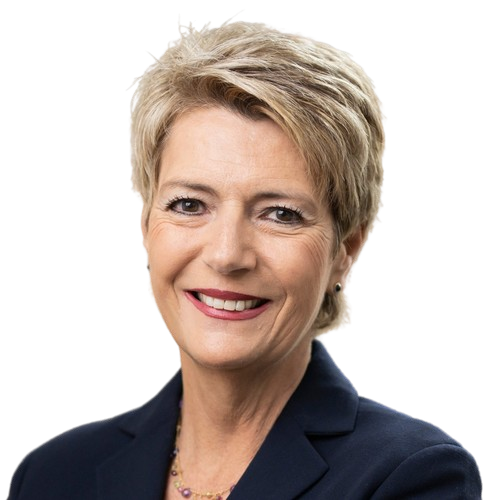
Karin Keller-Sutter
Federal Councillor & Head of the Federal Department of Finance, Switzerland

Colin Payne
Head of Innovation
Financial Conduct Authority (FCA)
Colin Payne is a distinguished leader in financial innovation, currently serving as the Head of Innovation at the Financial Conduct Authority (FCA) and Chair of the Global Financial Innovation Network (GFIN) convening over 90 national regulators to build a powerful, collaborative network.
In these roles, he spearheads strategic initiatives to foster growth through responsible innovation, such as the newly launched AI Lab, Sandboxes and TechSprint Programme.
Before joining the FCA, Colin was the Senior Director at PwC, where he delivered programs across the GCC, including national payment strategies and digital asset initiatives with Central Banks in the region.
He has also held Partner and EVP positions at EY and Capgemini with an early tenure at Apple working with Steve Jobs.
With over 30 years at the forefront of technology and change, Colin has built an award-winning portfolio designing and deploying world-class innovation.
He has held honorary positions at Kings College and Middlesex University.
Speaking at
-
12:00–1:30pmTue 23 JunGFTN InsightsRoundtable Room 2, Ground FloorOpen
Roadmap for AI and Quantum
Agentic Commerce: Who Governs the Machine that Pays?
-
 Amira KarimHead of International Public Policy, Payments & Financial ServicesAmazon
-
 Chan Yam KiManaging Director, Asia PacificCircle
-
 Colin PayneHead of InnovationFinancial Conduct Authority (FCA)
-
 Dea MarkovaDirector of PolicyFireblocks
-
 Georg SchneiderGlobal Head of RWADigital Asset
-
 Jesse McWatersEVP, Head of Global PolicyMastercard
-
 Dr. Mansour AlsalehGeneral Director for Innovation HubSAMA
-
 Nicole SandlerChief Ecosystem OfficerUbyx Inc
-
 Simon TaylorGTMTempo
-
 Sophie GilderManaging Director, Blockchain & Digital AssetsCommonwealth Bank Australia
-
 Tang WeiHead of Public Policy, Southeast Asia & Greater ChinaStripe
-
 Thibault MurelCISODFNS
-
 Jaskaran BhallaHead of ContentGlobal Finance & Technology Network (GFTN)Moderator
About this session
AI agents are already initiating real financial transactions - booking, subscribing, settling, and disbursing without a human approving each step. The commerce and payments infrastructure built around human decision-makers was not designed for a counterparty that never sleeps, cannot be held to a contract in the traditional sense, and can be compromised at the model layer rather than the credential layer.
This session convenes payments architects, legal practitioners, and AI deployment leads to work through the practical questions the industry is looking to answer: how do you authenticate an agent, assign liability for an autonomous transaction gone wrong, and design governance frameworks for a technology that is already in production.
Participants will examine the specific mechanics of agentic payment flows - wallet delegation architectures, spending limit enforcement, multi-agent authorisation chains, and the emerging standards around agent identity that are still being written in real time by consortia that have not yet reached consensus.
The session will also surface the fraud and risk management implications: how transaction monitoring systems designed to flag anomalous human behaviour respond to the high-frequency, pattern-consistent activity of a well-functioning agent - and what entirely new risk frameworks may be required when the buyer is a model, the merchant is an API, and the dispute resolution process was designed for neither. -
-
2:00–3:30pmTue 23 JunGFTN InsightsRoundtable Room 3, Ground FloorOpen
Roadmap for AI and Quantum
Central Banking in the Age of AI: Cybersecurity, Resilience and Trusted Adoption
-
Colin PayneHead of InnovationFinancial Conduct Authority (FCA)
-
 Iman van LelyveldHead of Data Science HubDe Nederlandsche Bank
-
 Jeremy HorExecutive Director, Enterprise Knowledge DepartmentMonetary Authority of Singapore
-
 Dr. Jochen PapenbrockEMEA Head of Financial TechnologyNVIDIA
-
 Laura Tamayo IglesiasData, AI, & Business Development DirectorIberpay
-
 Michael JeffersonHead of Financial Services Public Policy EMEAAmazon Web Services
-
 Dr. Nino LandererDeputy Director General Strategy & InnovationDeutsche Bundesbank
-
 Randall DuranSenior LecturerSingapore Management University
-
 Sonja DavidovicSenior Digital Expert on Transformative TechnologyInternational Monetary Fund
-
 Trevor FitzpatrickHead of DivisionCentral Bank of Ireland
-
 Caroline MalcolmStrategic Advisor on AI & Digital AssetsCambridge Centre for Alternative ForumModerator
-
 Díaz MiguelDeputy Head of the BIS Innovation Hub & Head of StrategyBank for International Settlements (BIS)Moderator
About this session
AI adoption by central banks, the financial institutions they supervise, and in financial systems and infrastructure is growing, even as AI’s capabilities and the AI risk landscape is rapidly evolving.
Increasingly powerful frontier models can enhance efficiency and decision making, whilst posing cybersecurity and financial system resilience risks as they can autonomously identify and exploit software vulnerabilities, raising significant implications for critical financial infrastructure such as national payment systems and the wider financial industry.
This roundtable discusses how central banks can prepare and respond to the next and future generations of AI capabilities and risks, ensuring cybersecurity, resilience and the trusted adoption of AI. The session will highlight best practices, challenges, lessons learnt and opportunities for cross-border collaboration in implementing and scaling AI safely and securely.
-
-
12:00–1:30pmWed 24 JunGFTN InsightsRoundtable Room 3, Ground FloorOpen
Roadmap for AI and Quantum
Building Regulatory Maturity: From Quantum Security to Quantum Advantage
-
 Achille YomiCo-Founder & Chief Executive OfficerScenario X
-
 Dr. Alessandro CurioniIBM Fellow, Vice President, Europe & Africa and Director, IBM Research - ZurichIBM Research
-
 Alvinder SinghHead, Innovation Acceleration OfficeMonetary Authority of Singapore
-
 Aqsa ZubairDeputy Director, FinTech SupervisionBermuda Monetary Authority
-
Colin PayneHead of InnovationFinancial Conduct Authority (FCA)
-
 Kelly RichdaleVenture Partner, Amadeus Capital Partners & Senior Advisor, SandboxAQSandboxAQ
-
 Levin KargHead of Modernizing RegulationOntario Securities Commission
-
 Dr. Philip IntalluraHead of Quantum TechnologiesHSBC
-
 Tibor MereyManaging Director and PartnerBCG
-
 Vasily PozdyshevAdvisorBIS Innovation Hub
-
 Charlie MarkhamTechnical Specialist, Emerging Tech & ResearchFinancial Conduct AuthorityModerator
About this session
To date, regulatory and industry engagement on quantum computing has largely focused on quantum security, with meaningful progress made in raising awareness, developing transition plans, and beginning the migration to post-quantum cryptography.
This roundtable reflects on that momentum and asks a forward-looking question:
What can the quantum security journey teach us about the regulator's role in enabling innovation and quantum applications in financial services?
Starting with the lens of GFIN’s Project Otto – Quantum Maturity for Regulators, this discussion will bring together regulators and industry to:
- Reflect on what has worked well in progressing quantum security from awareness to early implementation
- Discuss the regulatory tools, approaches, and mechanisms that have supported firm engagement and investment
- Explore how these lessons can be applied to support firms in experimenting with, investing in, and ultimately deploying quantum-enabled use cases
- Consider how regulators can balance risk mitigation with enabling growth, ensuring markets are prepared for both the challenges and opportunities quantum technologies present
By connecting lessons and experiences from quantum security to emerging quantum advantage, this roundtable aims to support more coordinated, proactive, and innovation-oriented regulatory approaches to quantum computing in financial services. -
-
12:00–1:30pmThu 25 JunGFTN InsightsRoundtable Room 1, Ground FloorOpen
Blueprint for Digital Assets
Programmable Compliance: Opportunities, Risks, and Real Use-Cases
-
 Alexandre KechChief Executive OfficerGlobal Legal Entity Identifier Foundation (GLEIF)
-
Aqsa ZubairDeputy Director, FinTech SupervisionBermuda Monetary Authority
-
 Audrey MetzgerDirector of Innovation & Financial Market InfrastructuresBanque de France
-
Colin PayneHead of InnovationFinancial Conduct Authority (FCA)
-
 Prof. Fabian SchärProfessor of DLT & FinTechUniversity of Basel
-
 Karmela HoltgreveDeputy Head & Head of OperationsBIS Innovation Hub
-
 Pascale BrudererFounder & ChairwomanSwiss Stablecoin AG
-
 Prof. Nina ReiserAssociate Professor of Financial Market Law, Center for Financial Services InnovationUniversity of St GallenModerator
-
 Dr. Stefan HärtnerSenior Legal & Policy SpecialistSwiss Financial Market Supervisory Authority (FINMA)Moderator
About this session
The ever evolving and accelerating world of financial and payment services presents challenges for regulators and market participants. Regulators struggle with establishing an appropriate regulatory framework to effectively address the risks associated with services leveraging innovative technologies and market participants may reject new rules if compliance is perceived as too burdensome and costly.
Technological advancement, however, not only presents challenges but also opportunities as rules and policies may be directly implemented into products and the provision of services to clients. At the roundtable, regulators, academics and industry leaders will explore the potential, risks and limits as well as regulatory requirements on a national and international level of this approach, which is commonly referred to as "programmable compliance". -

