

Hosted by
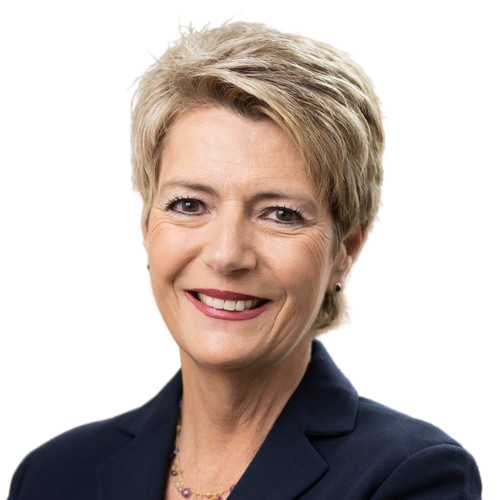
Karin Keller-Sutter
Federal Councillor & Head of the Federal Department of Finance, Switzerland
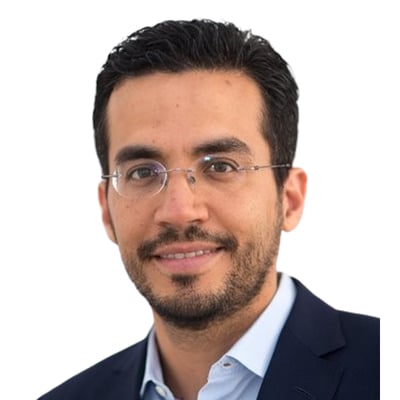
Lamine Brahimi
Co-founder & Managing Partner
Taurus
Lamine Brahimi, CFA is a co-founder and Managing Partner of Taurus SA.
Prior to co-founding Taurus SA, Lamine was previously Deputy-COO, Chief Digital Officer of Lombard Odier’s wealth management unit as well as General Secretary of the Group.
In his capacity as Chief Digital Officer, he spearheaded the design and development of Lombard Odier’s wealth management digital strategy leading to several critically acclaimed platforms in particular in relation to investment advisory.
He also pushed the first real blockchain prototype to be tested in a private bank (clearing and settlements of structured products with the Swiss Stock Exchange and Swiss Fintech Innovations).
Between 2016 and 2018, he represented the Swiss Private Banks at the Fintech Commission of the Swiss Bankers Association and was a founding member and Board member of Swiss Fintech Innovations. He started his career as a management consultant at McKinsey & Company.
Lamine holds an MSc in Communication Systems Engineering from EPFL, an MBA with distinction from INSEAD, and is also CFA charterholder.
Speaking at
-
3:45–4:25pmTue 23 JunForum StageKongresssaal, Level 1Open
Blueprint for Digital Assets
Tokenized Equities: How the Stock Market Gets Rebuilt On-Chain
-
 Lamine BrahimiCo-founder & Managing PartnerTaurus
-
 Marco KesslerHead Product and Business Development for Digital AssetsSIX Group
-
 Nicola WhiteVice President, Institutional Crypto, Robinhood and General Manager, BitstampRobinhood
-
 Oya CeliktemurDirector, EMEAOndo Finance
-
 Pavel KhristolyubovChief Operating OfficerWallet in Telegram
-
 Lars SjögrenBoard DirectorNFT Ventures ABModerator
About this session
Recent tokenization pilots signal that T+0 equity settlement is no longer theoretical - it is arriving, and it will change how shares are issued, traded, and held. Digital exchanges, wealth managers, platforms and custodians now face a fundamental question: how do you integrate on-chain equities into portfolios and platforms? This session brings together the architects of digital equity tokens to map what the transition actually requires.
-
-
2:00–3:30pmWed 24 JunGFTN InsightsRoundtable Room 3, Ground FloorOpen
Blueprint for Digital Assets
Digital Money Meets Traditional Finance: Treasury, Cash Management, and Liquidity
-
 Dr. Alexander ThomaHead of Digital AssetsPostFinance
-
 Alvinder SinghHead, Innovation Acceleration OfficeMonetary Authority of Singapore
-
 Arjun Vir SinghPartner, Global Head of Fintech & Digital AssetsArthur D. Little
-
 Ashley BarnesHead of European Regional Treasury Centre CountriesHSBC
-
 Ceridwen ChooChief Executive OfficerCleanverse International Pte Ltd
-
 Jesse McWatersEVP, Head of Global PolicyMastercard
-
Lamine BrahimiCo-founder & Managing PartnerTaurus
-
 Laura LohDirector, Portfolio Strategy & Risk Group Office; Director, Investment (Blockchain)Temasek
-
 Rahul AdvaniGlobal Co-Head of PolicyRipple
-
 Richard van ReesExecutive Director, Digital Money ProductsUBS
-
 Serena SebastianiGroup Chief Strategy & Venture Officer, Head of Regulatory AffairsFuze
-
 Yoyee WangGlobal Head of B2BByBit
-
 Steve VallasChief Executive OfficerBlockchain APACModerator
About this session
Stablecoins have crossed $300 billion in circulation. Tokenized deposits are live at various global banks. Yet for all the headline numbers, the hard question remains unanswered: how do programmable money instruments actually integrate with the treasury operations, correspondent banking relationships, and payments infrastructure that keep traditional finance running?
This session convenes senior practitioners from banks, corporates, and digital asset firms to examine the real friction points - legal, operational, and technical - where digital money collides with TradFi plumbing, and where the integration is showing progress. Participants will discuss strategies to scale the integration of digital assets within traditional operations, including updating risk management frameworks, adhering to regulatory requirements, and architecting interoperability across systems.
-

