

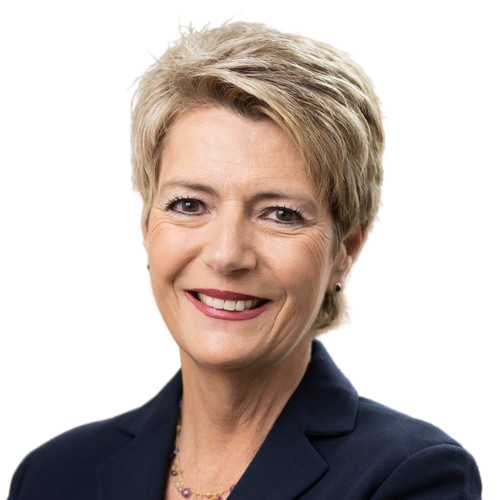
Hosted by
Karin Keller-Sutter
Federal Councillor & Head of the Federal Department of Finance, Switzerland
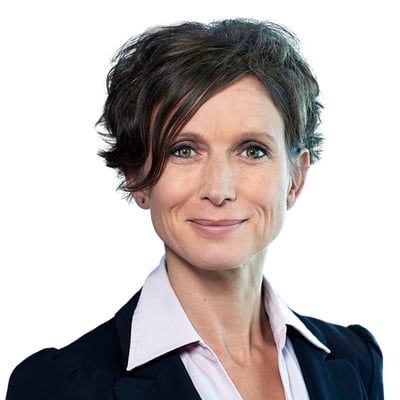
Pascale Bruderer
Founder & Chairwoman
Swiss Stablecoin AG
Pascale Bruderer (born in 1977)
- Founder of the Swiss Stablecoin AG
- Board Member of listed companies Galenica and Orell Füssli
- Board Member of the Schwab Foundation for Social Entrepreneurship
- Member of the Young Global Leader Community of the World Economic Forum
Former Member of the Federal Parliament: National Council 2002-2011, Speaker of the National Council 2009/10, Council of States 2011-2019
MA in political sciences, University of Zurich;
Global Leadership and Public Policy Diploma, Harvard University.
Speaking at
-
12:00–1:30pmThu 25 JunGFTN InsightsRoundtable Room 1, Ground FloorOpen
Blueprint for Digital Assets
Programmable Compliance: Opportunities, Risks, and Real Use-Cases
-
 Alexandre KechChief Executive OfficerGlobal Legal Entity Identifier Foundation (GLEIF)
-
 Aqsa ZubairDeputy Director, FinTech SupervisionBermuda Monetary Authority
-
 Audrey MetzgerDirector of Innovation & Financial Market InfrastructuresBanque de France
-
 Colin PayneHead of InnovationFinancial Conduct Authority (FCA)
-
 Prof. Fabian SchärProfessor of DLT & FinTechUniversity of Basel
-
 Karmela HoltgreveDeputy Head & Head of OperationsBIS Innovation Hub
-
 Pascale BrudererFounder & ChairwomanSwiss Stablecoin AG
-
 Prof. Nina ReiserAssociate Professor of Financial Market Law, Center for Financial Services InnovationUniversity of St GallenModerator
-
 Dr. Stefan HärtnerSenior Legal & Policy SpecialistSwiss Financial Market Supervisory Authority (FINMA)Moderator
About this session
The ever evolving and accelerating world of financial and payment services presents challenges for regulators and market participants. Regulators struggle with establishing an appropriate regulatory framework to effectively address the risks associated with services leveraging innovative technologies and market participants may reject new rules if compliance is perceived as too burdensome and costly.
Technological advancement, however, not only presents challenges but also opportunities as rules and policies may be directly implemented into products and the provision of services to clients. At the roundtable, regulators, academics and industry leaders will explore the potential, risks and limits as well as regulatory requirements on a national and international level of this approach, which is commonly referred to as "programmable compliance". -
-
2:00–3:30pmThu 25 JunGFTN InsightsRoundtable Room 1, Ground FloorOpen
Blueprint for Digital Assets
Stablecoins and the Monetary Order: What Is at Stake and What Should Drive their Design?
-
 Andreas KubliManaging Director Group Head of Digital AssetsUBS
-
 Dr. Attilio ZanettiAlternate Member of the Governing BoardSwiss National Bank
-
 Aymeric SalleyHead of Digital Assets PlatformBanking Circle
-
 Christian SchmidSenior Partner & Global Leader | Global Banking & CIBBCG
-
 Evaldas RuzgysMember of the BoardBank of Lithuania
-
 Michael ManzHead of the Financial Systems & Financial Markets DepartmentState Secretariat for International Finance SIF
-
Pascale BrudererFounder & ChairwomanSwiss Stablecoin AG
-
 Rebecca MunDirectorS&P Global
-
 Andrea Luca AerniPolicy Advisor Digital Finance and InnovationState Secretariat for International Finance (SIF)Moderator
About this session
The global monetary system has a plumbing problem. Correspondent banking is slow, expensive, and exclusive, and now a $300 billion stablecoin market has grown around it. Yet 97% of that market is dollar-denominated, issuers hold hundreds of billions in short-term Treasuries, already impacting yields, and the largest stablecoin carries rating agencies’ lowest stability ratings.
Stablecoins could become genuinely useful payments infrastructure: for cross-border payments, programmable settlement, and treasury operations. In this roundtable we explore what it takes to make stablecoins truly stable and useful for broad adoption, and why Switzerland is well-placed to help (re-)define what responsible stablecoin design looks like. -

