

Hosted by
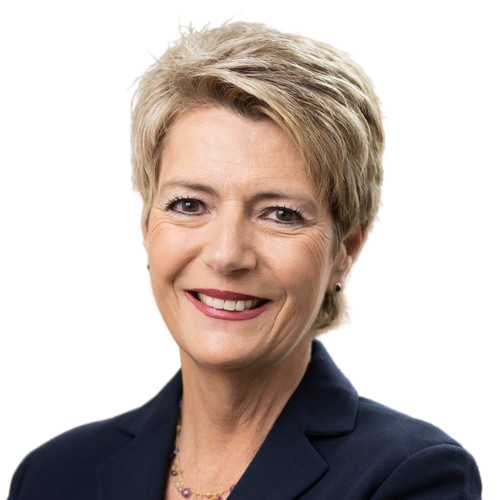
Karin Keller-Sutter
Federal Councillor & Head of the Federal Department of Finance, Switzerland
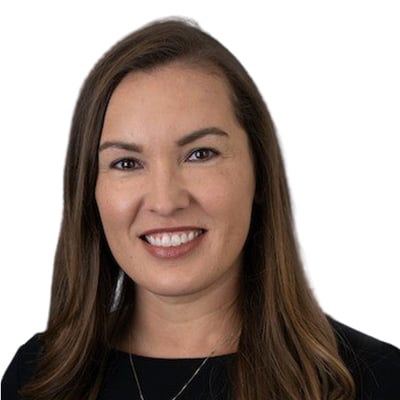
Emily Slater
Executive Director
Bretton Woods Committee
Emily Slater was appointed Executive Director at the Bretton Woods Committee on July 1, 2020. As the Committee's CEO, she is responsible for developing and implementing the organization's strategic direction and work program. Previously, she served as the organization’s Deputy Director for six years.
Prior to joining the Committee, she was the International Programs Director at INMED Partnerships for Children where she managed a project portfolio of agriculture, health, and nutrition programs in Brazil, Jamaica, Peru and South Africa. Slater also led an award-winning youth development program serving at-risk youth in low-income communities in North Carolina. She was an English teacher in El Salvador and spent time working and living in New Zealand. She has a M.A. in International Development from North Carolina State University and B.A. degrees in Sociology and French from the University of North Carolina at Wilmington.
Slater currently serves on the Steering Committee for the IFI Working Group, a diverse group of non-profit organizations with varying missions that collectively believe in the value of the international financial institutions. She also serves on the Board of Directors for the Arlington County Adult Soccer Association. She lives with her husband and dog in Arlington, Virginia.
Speaking at
-
2:00–3:30pmThu 25 JunGFTN InsightsRoundtable Room 3, Ground FloorOpenModerator
Blueprint for Digital Assets
Navigating the New Digital Order: Regulatory Divergence, Monetary Architecture, and a Path toward Coordination
-
 Audrey MetzgerDirector of Innovation & Financial Market InfrastructuresBanque de France
-
 Dante DisparteChief Strategy Officer and Head of Global Policy & OperationsCircle
-
 Isadora ArredondoVice President, Global PolicyHedera
-
 Jessica RenierManaging Director & Head of Digital FinanceInstitute of International Finance (IIF)
-
 Karim MouaffakFinancial Sector SpecialistArab Monetary Fund
-
 Dr. Michael HuertasPartner, Global FS Legal LeaderPwC Legal
-
 Mykolas MajauskasGlobal Head of PolicyBybit
-
 Natalya ThakurFounder & Chief Executive OfficerKnova
-
 Pavle AvramovicDirector of Research & PolicyFinancial Innovation for Impact
-
 Prof. Sarah HammerCo-ChairBretton Woods Committee Working Group on AI
-
 Thorsten PauliCountry Executive Switzerland, & Head Equity Capital Markets DACHBank of America
-
 Emily SlaterExecutive DirectorBretton Woods CommitteeModerator
About this session
Digital assets, programmable money, and AI-driven transactions are crossing borders at increased speed. But the rules governing them are being written jurisdiction by jurisdiction, with no shared architecture in sight. As the US advances GENIUS Act rules for private-sector stablecoins, the EU deepens MiCA and pursues a digital euro, and China scales its state-backed e-CNY, three major economies are building divergent governance frameworks around one underlying technology — with significant implications for cross-border payments, monetary policy transmission, and AI in the global financial system.
This policy divergence is a compliance challenge for market participants, but it is also the early stage of a structural buildup. When domestically rational policy choices generate internationally costly spillovers — and when no coordinating mechanism exists to manage them — fragmentation compounds over time until the cost of inaction becomes prohibitive. Digital currencies and AI governance are following this trajectory, and while the window to get ahead of it remains open, it is closing.
Against this backdrop, the Bretton Woods Committee will convene a closed roundtable at Point Zero Forum on Thursday, June 25th to bring together global policymakers, central bankers, regulators, and private sector leaders to stress-test the diagnosis. This discussion will directly inform the Bretton Woods Committee's upcoming work, with a focus on the defining digital governance challenge of the moment: whether coordination across jurisdictions can accelerate to match the digital rails being built beneath the global financial system.
The roundtable will be a 90-minute discussion featuring 10 minutes of scene-setting remarks from featured speakers, followed by an open exchange among the broader group. A brief framing paper will be circulated in advance. The core question animating the discussion: What are the costs of continued fragmentation — and what global coordination mechanisms are necessary to manage the associated risks and opportunities?
-

