
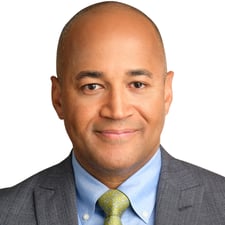








Dante Disparte is the Chief Strategy Officer and Head of Global Policy and Operations for Circle, a financial technology firm and the issuer of the world’s leading regulated digital currencies. In this role, he leads global strategy and operations, market expansion, regulatory policy, public affairs and corporate communications. Dante serves on the board of the Atlantic Council, and The Economic Club of Washington, D.C.
Prior to joining Circle, Dante was a founder of the Libra Association and has more than two decades of experience as an entrepreneur, business leader and global risk expert, most recently as founder and chairman of Risk Cooperative. Dante served as an appointee on the Federal Emergency Management Agency’s (FEMA) National Advisory Council, the U.S. federal emergency response agency.
Dante is a frequent speaker and commentator on business and political issues shaping the world. His views on risk, economic competitiveness and technology are regularly featured in leading media and publications such as Harvard Business Review, BBC, Forbes, and Diplomatic Courier, where Dante serves on the editorial advisory board.
Dante is a graduate of Harvard Business School and holds an MSc. in Risk Management from the NYU Stern School of Business and a B.A. in International and Intercultural Studies from Goucher College, from which he received the highest alumni achievement award for public service. He is the co-author of “Global Risk Agility and Decision Making” (Macmillan, 2016) and was recognized as one of the 40 leaders under 40 by the Washington Business Journal and in the inaugural Powermeter 100 list. Dante is a life member of the Council on Foreign Relations, a member of the World Economic Forum, and the Bretton Woods Committee.

