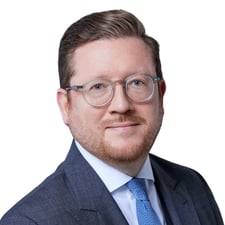








Dr Michael Huertas LL.M., MBA, is a Partner at PwC Legal and Global & European Financial Services Legal Leader. He is admitted as a Solicitor-Advocate in England & Wales, a Solicitor in Ireland and a German Rechtsanwalt. He advises financial institutions, FinTechs and market participants on EU and eurozone regulatory, supervisory and monetary policy issues, including the Banking Union, European Central Bank activity, Capital Markets Union initiatives and the priorities of the European Supervisory Authorities. Michael is also a member of PwC’s Capital Markets Leadership Team. His structured finance practice covers derivatives, securities financing transactions and securitisations, as well as conduct, governance, non-performing loans and assets, financial market infrastructure, collateral and custody arrangements. His FinTech regulatory work focuses on MiCAR, DORA, blockchain-based business models, DeFi, crypto-custody, FinTech providers and digital banks entering or expanding in the European Union.
Roundtable Room 3, Ground Floor
Open
Digital assets, programmable money, and AI-driven transactions are crossing borders at increased speed. But the rules governing them are being written jurisdiction by jurisdiction, with no shared architecture in sight. As the US advances GENIUS Act rules for private-sector stablecoins, the EU deepens MiCA and pursues a digital euro, and China scales its state-backed e-CNY, three major economies are building divergent governance frameworks around one underlying technology — with significant implications for cross-border payments, monetary policy transmission, and AI in the global financial system.
This policy divergence is a compliance challenge for market participants, but it is also the early stage of a structural buildup. When domestically rational policy choices generate internationally costly spillovers — and when no coordinating mechanism exists to manage them — fragmentation compounds over time until the cost of inaction becomes prohibitive. Digital currencies and AI governance are following this trajectory, and while the window to get ahead of it remains open, it is closing.
Against this backdrop, the Bretton Woods Committee will convene a closed roundtable at Point Zero Forum on Thursday, June 25th to bring together global policymakers, central bankers, regulators, and private sector leaders to stress-test the diagnosis. This discussion will directly inform the Bretton Woods Committee's upcoming work, with a focus on the defining digital governance challenge of the moment: whether coordination across jurisdictions can accelerate to match the digital rails being built beneath the global financial system.
The roundtable will be a 90-minute discussion featuring 10 minutes of scene-setting remarks from featured speakers, followed by an open exchange among the broader group. A brief framing paper will be circulated in advance. The core question animating the discussion: What are the costs of continued fragmentation — and what global coordination mechanisms are necessary to manage the associated risks and opportunities?