

Tue 23 Jun10:45–11:05amForum Stage
Tokenizing Trust: Programmable Money as the Infrastructure of Inclusive Global Finance
About This Session
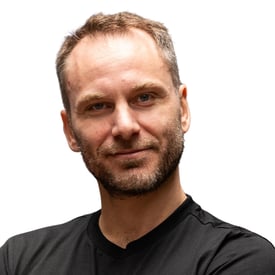
As programmable money matures from stablecoin to full financial infrastructure, the question shifts from whether it works to who it serves and how it's governed. This fireside with Tether CEO Paolo Ardoino explores the role of programmable assets in building a faster, more inclusive, and global financial system.
- When
- Tuesday 23 June10:45–11:05am, Zurich time
- Where
- Forum StageKongresssaal, Level 1
- Access
- Open
More Blueprint for Digital Assets Sessions
-
12:00–1:30pmTue 23 JunGFTN InsightsRoundtable Room 3, Ground FloorOpen
Blueprint for Digital Assets
Agorá - How Moving Money Matters
-
 Andrei PustelnikovSenior Manager, Wholesale experiments and international projectsBank of England
-
 Audrey MetzgerDirector of Innovation & Financial Market InfrastructuresBanque de France
-
 Holger NeuhausHead of Market Innovation & IntegrationEuropean Central Bank
-
 Louise JohnstonDirector, Government Affairs & PolicyMastercard
-
 Marianne ZentriegenHead of Payment JourneysPostFinance AG
-
 Masashi WatanabeManaging Director, Head of Digital AssetsMUFG Bank, Ltd.
-
 Michael ZimmertHead of Banking Operations AnalysisSwiss National Bank
-
 Nick KeriganManaging Director, Head of InnovationSwift
-
 Rene MichauGlobal Head, Digital AssetsStandard Chartered
-
 Sabih BehzadHead of Digital Assets & Currencies TransformationDeutsche Bank AG London
-
 Tim MoncrieffManaging Director of Visa Payments & Currencycloud & VP, Strategic Initiatives & Execution, Visa DirectVisa
-
 Zou XiaonanExecutive Director, Group Digital Assets; Head of Digital Assets, Group TreasuryUBS
-
 Jessica RenierManaging Director & Head of Digital FinanceInstitute of International Finance (IIF)Moderator
-
 Morten BechCentre Head - SwitzerlandBIS Innovation HubModerator
About this session
Project Agorá tests the hypothesis that a multi-currency settlement mechanism that leverages tokenization and programmability could mitigate inefficiencies and frictions in cross-border payments, making them faster, more transparent and safer.
To examine this, the Bank for International Settlements (BIS) and the Institute of International Finance (IIF) combined forces to convene seven central banks and over 40 international financial institutions to test the tokenization of commercial bank deposits and central bank reserves on a unifying ledger. The roundtable will bring together Project Agorá public and private sector participants to reflect on the project and lessons learned.
-
-
1:20–2:00pmTue 23 JunForum StageKongresssaal, Level 1Open
Blueprint for Digital Assets
From Pilots to Plumbing: How Switzerland is Building the Infrastructure for Programmable Money
-
 H.E. Adrian Cachinero VasiljevicCo-founderSteakhouse Financial
-
 Dr. Alexander ThomaHead of Digital AssetsPostFinance
-
 Frederik GregaardChief Executive OfficerCardano Foundation
-
 Dr. Roman StuderChief Executive OfficerSwiss Bankers Association
-
 Stephanie K. WickihalderPresidentSwiss FinTech Innovations | SFTI
-
 Nicola PlainPrincipal Business Consultant Digital AssetsZühlkeModerator
About this session
Switzerland is not debating whether programmable money works - it is building it. Various pilots are now looking to answer the same question: how does programmable money move from laboratory to the infrastructure layer of everyday finance? This session examines where deposit tokens, stablecoins, and CBDCs serve genuinely different use cases, and what the rest of the world can learn from the Swiss approach.
-
-
2:00–3:30pmTue 23 JunGFTN InsightsRoundtable Room 2, Ground FloorOpen
Blueprint for Digital Assets
The Future of Commercial Bank Money On-Chain
-
 Alex GluchowskiCo-founder & Chief Executive OfficerMatter Labs | ZKsync
-
 Andrew BrinsonChief Operating OfficerPave Bank
-
 Aymeric SalleyHead of Digital Assets PlatformBanking Circle
-
 Daniel NagyDirectorForefront
-
 Keisuke KimuraVice PresidentJapan Cryptoasset Business Association
-
 Mai KanekoInternational Business LeadDeCurret DCP Inc.
-
 Manuel KleinHead of Market Management Payments & Digital CurrenciesDeutsche Bank
-
 Martin BrunckoCo-Founder & Chief Executive OfficerSchuman Financial
-
 Dr. Michael BlaschkeCo-Host, Head of PartnershipsBitcoin, Fiat, & Rock'n'Roll (BFRR)
-
 Sébastien Van CampenhoudtDirector, Innovation & Digital Assets, Tokenized Cash LeadEuroclear
-
 Erwin VoloderDirector, Research & StrategyBlockchain For EuropeModerator
About this session
As the adoption of stablecoins accelerates globally, policymakers and financial institutions are confronting a deeper structural question: what form of money will anchor the next generation of digital finance?
Deposit tokens have emerged as one of the leading responses to this challenge, combining the safeguards of the traditional banking system with the programmability and efficiency of distributed ledger technology. However, despite growing institutional interest, most initiatives remain confined to pilots and closed networks, even as stablecoins rapidly achieve scale, distribution, and integration across digital asset ecosystems.
This roundtable brings together banks, infrastructure providers, and financial institutions to examine the challenges that constrain adoption of tokenized deposits, and the extent to which deposit tokens will coexist with or compete against stablecoins and other forms of digital money. It will also explore the growing push by jurisdictions worldwide to develop local-currency stablecoins as a strategic counterweight to dollar-denominated instruments and what these twin approaches - local currency stablecoins vis-a-vis on-chain commercial bank money - mean for the future shape of digital money.
Critically, the discussion will pose a broader strategic questio: whether tokenized commercial bank deposits can provide a sovereign and trusted foundation for the digital economy, or whether the future of digital money will be predominantly shaped by private stablecoin ecosystems, and the role of jurisdiction-specific stablecoin models therein.
-